HMRC · Service design · Content design · Decision design · Automation
Overview
HMRC’s existing online penalty appeal service relied heavily on free text and manual caseworker judgement. The challenge was to work out how much of a subjective decision-making process could be safely automated without preventing users from making a full appeal where human review was still needed.
I designed a new approach that turns published policy and operational judgement into a structured question flow. The service gathers the evidence needed to establish whether an appeal falls within agreed criteria for automatic approval, while routing anything outside those criteria to a caseworker.
I also redesigned the wider journey so users do not need to understand the difference between appealing a penalty, telling HMRC they did not need to file for that year, and leaving Self Assessment altogether.
Role: Service Designer and Content Designer
Organisation: HMRC, through consultancy
Service: Appeal a Self Assessment penalty
Stage: Live in private beta; appeals automation being tested and stabilised
Users: Individuals with a Self Assessment penalty
Scale: Around 48,000 cases to date; roughly 12,000 have been routed into the deregistration/cessation journey
The problem
The previous service was an iForm. Users selected a reason for appealing, answered some follow-up questions and were usually given free-text boxes to explain their circumstances.
HMRC publishes a set of ‘reasonable excuses’ that can support an appeal, but the existing journey also included an ‘other’ option. The business found that many users gravitated toward free text, even where one of the structured reasons applied.
That made automation difficult. A robot would have to interpret an open-ended account, infer the relevant facts and make a judgement that caseworkers had traditionally made themselves. That approach would have been expensive, difficult to assure and potentially inappropriate for a decision with policy and legislative consequences.
Turning policy into decision criteria
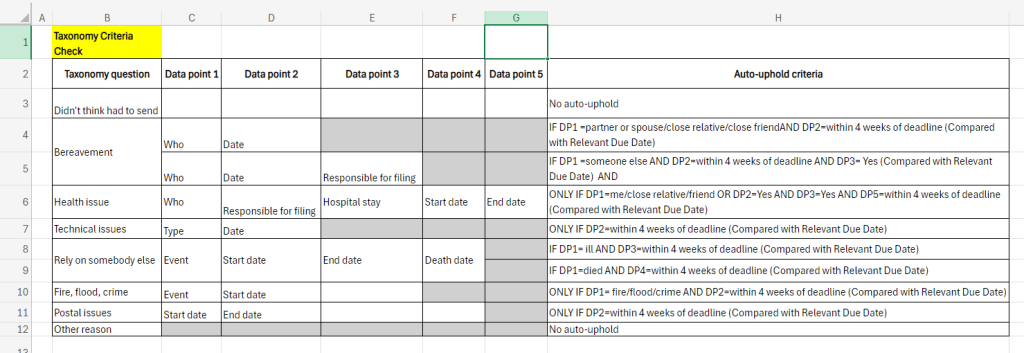
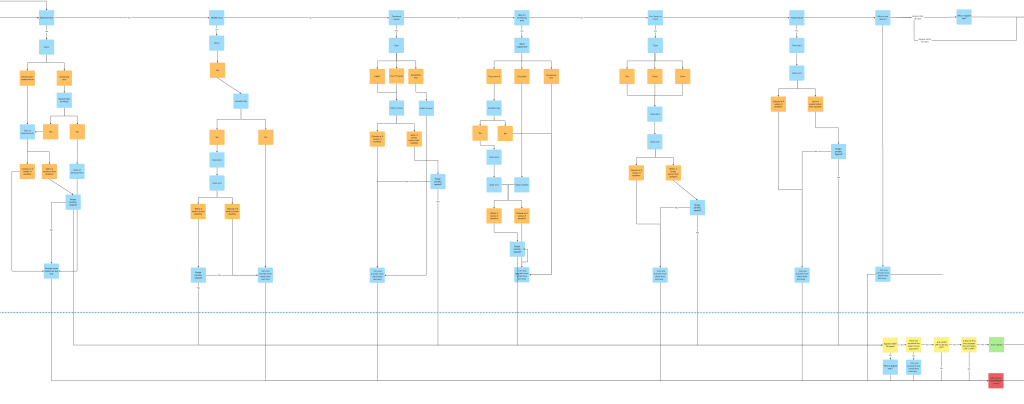
I started with HMRC’s published reasonable excuses and created a spreadsheet that translated each excuse into candidate criteria for automation.
“At every stage, Andy sought advice and clarity on the policy impact of design choices, amending and adapting where necessary.”
Holly Burgess, Policy Lead, HMRC
I then asked policy specialists and process owners to review those criteria, change the thresholds where necessary and confirm the conditions under which a caseworker would consistently uphold an appeal.
For example, an illness-related appeal could depend on factors such as when the illness occurred and whether it involved a hospital stay. Other criteria were not user-facing at all, such as whether the person had previously received a penalty.
Once the criteria were agreed, I could turn them into a question flow and pass the corresponding decision rules to development.
Designing a structured appeal
The core design principle was that the service should do more of the work for the user.
Instead of expecting someone to write an unstructured account and hoping HMRC could interpret it, the journey asks a sequence of simple questions that gather the evidence needed to build the appeal.
If the answers meet the agreed criteria and there are no other flags on the user’s record, the service can automatically uphold the appeal and tell the user immediately that the penalty has been cancelled.
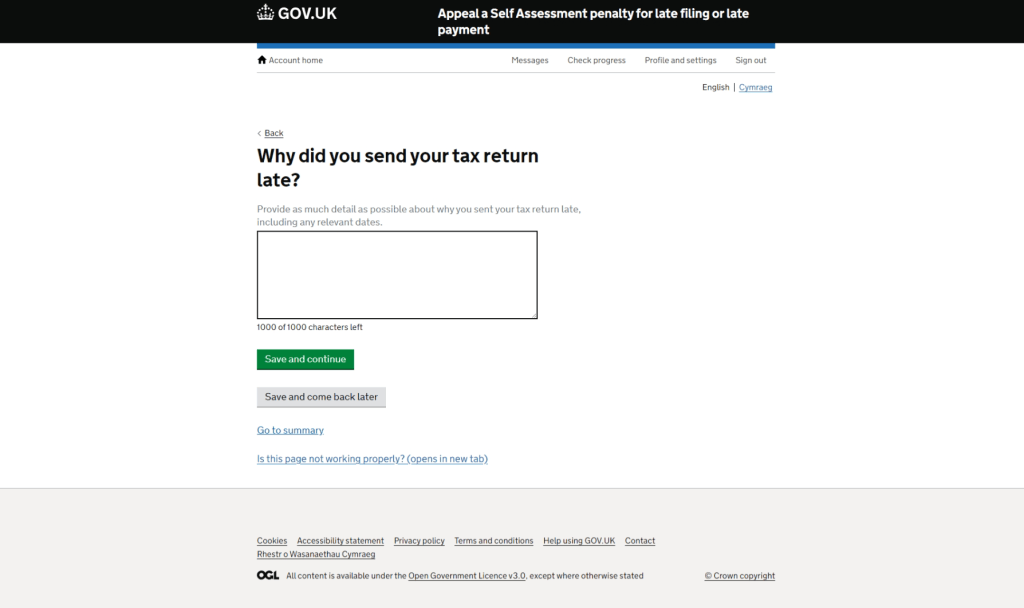
If anything falls outside the automation criteria, the user is still given the opportunity to provide a full free-text appeal. That case is then routed to a workbasket for a caseworker to review.
This preserves the user’s ability to make an appeal while limiting automation to scenarios where the outcome is sufficiently deterministic.
Reducing reliance on the ‘other’ option
We still had a problem: if users were shown a list of reasonable excuses alongside an ‘other’ option, many could go straight to free text even when a structured route applied.
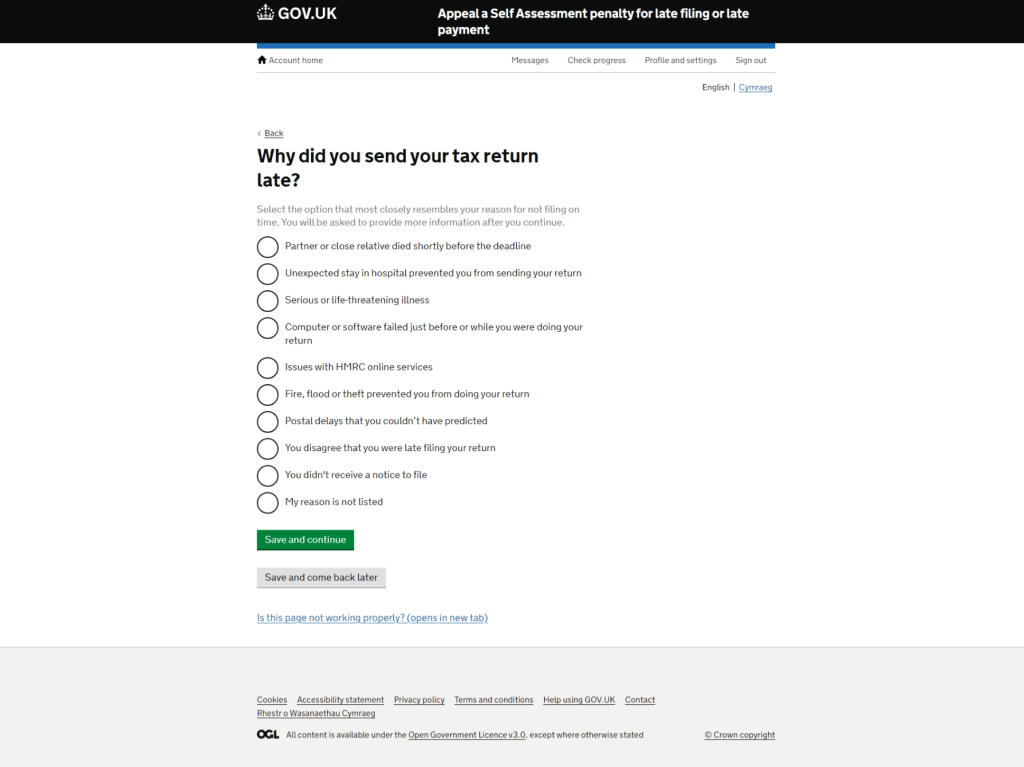
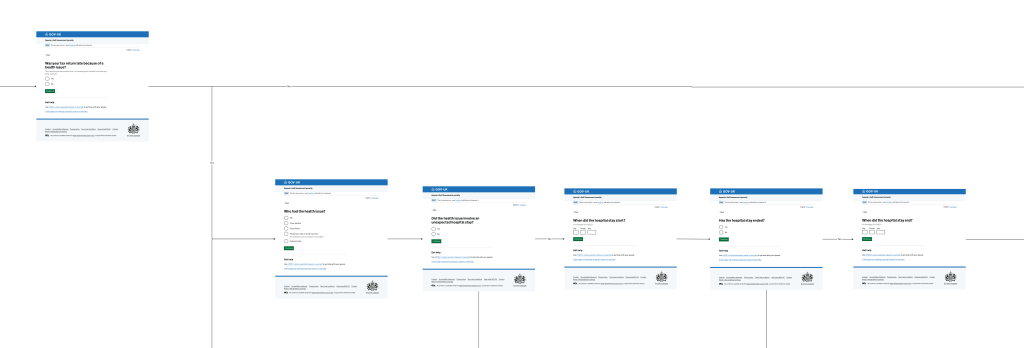
I changed the model from one multiple-choice question into a sequence of yes-or-no questions: for example, whether the return was late because of illness, bereavement or another recognised circumstance.
If the user says yes, the service asks the follow-up questions needed for that excuse. If they say no, it moves to the next.
I initially ordered the sequence using data about how frequently different excuses occurred. User research then helped refine that order. For example, although illness was more common, we placed bereavement first because some participants could otherwise interpret circumstances involving a death as an illness-related appeal.
The aim was not to persuade users toward a particular answer, but to help them recognise the most specific route that matched their circumstances before they reached the open-ended option.
Designing around the user’s real goal
The existing service also assumed that anyone with a penalty needed to make an appeal. Operational teams knew this was not always true.
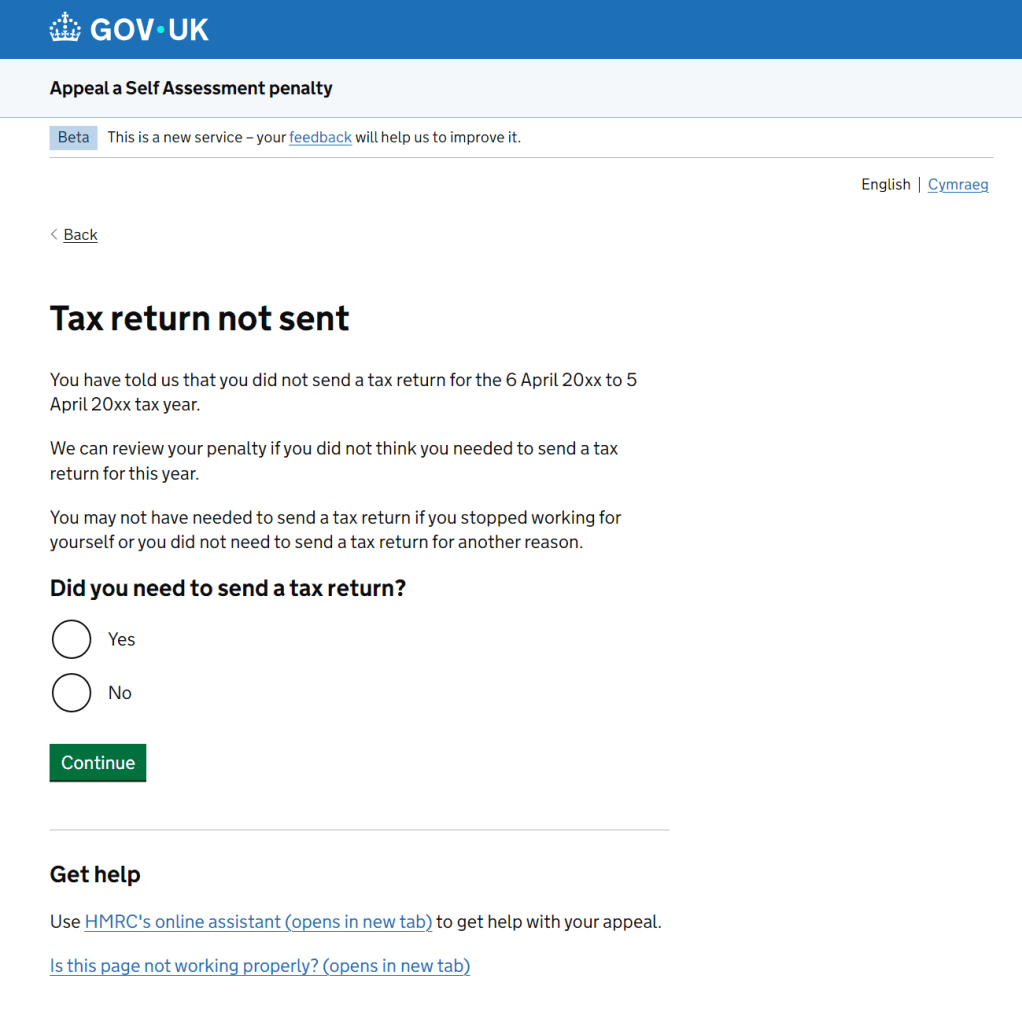
Some users had received a penalty because HMRC was expecting a return, but the user did not actually meet the criteria to file for that year. From HMRC’s perspective, that requires a different administrative action. From the user’s perspective, the goal is simply to resolve the penalty.
I introduced triage questions to establish whether the user genuinely needed to file. The service can then route them either into the appeal journey or into the route for telling HMRC they did not need to send a return for that tax year.
The journey can also identify where the user has no ongoing reason to remain in Self Assessment and allow them to address that at the same time. This tackles a further operational problem where users resolved one year’s issue but remained in Self Assessment and received another penalty the following year.
Using data HMRC already holds
The legacy service also asked users to enter information HMRC already held, such as details of the penalty they wanted to appeal.
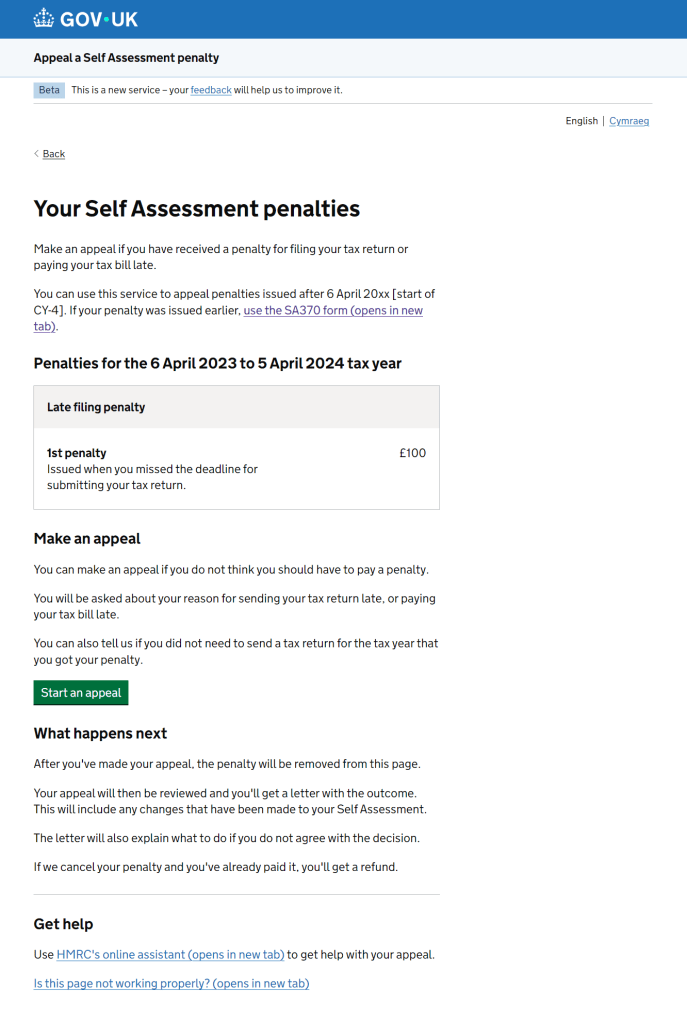
The redesigned service includes a dashboard showing the user’s existing penalties and which ones can be appealed. This removes unnecessary data entry and makes the starting point clearer.
Suggested caption: The dashboard uses HMRC-held data to show active penalties and available actions instead of asking users to reproduce information the organisation already knows.
Suggested alt text: Screenshot of a dashboard listing a user’s Self Assessment penalties and the actions available for each.
My role
I led the service and content design for this work.
My role included translating published policy into proposed decision criteria, facilitating review with policy and process owners, designing the question logic, working with user research to refine the sequence, and collaborating with interaction design and development to turn the rules into a working service.
I also joined the appeal journey to the wider Self Assessment ecosystem, using my knowledge of registration and deregistration to remove organisational boundaries that did not make sense to users.
Current outcome
The service has handled around 48,000 cases to date. Approximately 12,000 of those have been routed into the deregistration/cessation journey because the user’s underlying need was not simply to appeal a penalty.
That connected journey is already automating at close to 60%.
The penalty dashboard is live. Full appeals automation is currently being tested and technical issues are being worked through before it can operate at the intended level.
I would keep those outcomes separate in the portfolio: the service is already demonstrating the value of triage and connected journeys at scale, while the appeal-decision automation itself remains work in progress.
What this demonstrates
- Decision design — turning policy and operational judgement into structured, auditable service logic.
- Content design — replacing open-ended complexity with questions that help users provide the right evidence.
- Service design — connecting appeals, previous-year filing requirements and deregistration around the user’s actual goal.
- Responsible automation — defining where automated outcomes are appropriate and preserving human review where they are not.
- User research — refining the order and interpretation of questions based on observed behaviour.
- Cross-functional leadership — working across policy, process, research, interaction design and development to move from published guidance to a functioning service.

 Andy Price